
How Much Does It Cost to Hire an Architect?
How Do Architects Get Paid – Hourly, Flat Fee, or Percentage?
One of the first questions clients ask when considering an architectural project is: how will the architect charge for their work?
Architects may charge an hourly rate, agree a fixed fee, calculate their fee as a percentage of the construction cost, or use a combination of these methods. There is no single approach that suits every project.
At MB Architecture, we generally work on a fixed-fee basis because it gives our clients greater certainty and allows us to plan the resources needed to deliver the project properly. However, there are situations where an hourly rate may be more appropriate, particularly when the scope of work is not yet clear.
The most important point is that clients should understand exactly what is included in an architect’s quotation, what could lead to additional fees and how any extra work will be agreed.
What is a typical architectural design fee?
Our architectural design fees start at just £999+VAT for a simple project. Contact us to arrange a free consultation where we will discuss your project, provide you with free advice, and then provide you with a fee proposal and timescale for your project.
What Is a Fixed Architectural Fee?
A fixed fee is an agreed price for completing a clearly defined scope of architectural services.
The architect and client agree what work will be undertaken before the project begins. Provided the scope does not change, the architect completes the agreed services for the stated fee.
At MB Architecture, our fixed fees only change when we are asked to undertake work outside the scope of the original quotation.
This gives the client clarity over what they are paying for and helps avoid unexpected invoices during the project.
However, a fixed fee does not necessarily mean that every possible service is included. It applies to the specific scope set out in the fee quotation.
That is why the detail within the quotation is just as important as the total figure.
Do Architect’s have to work to mandatory fee scales?
No. This practice is not acceptable and the Royal Institute of British Architects[MB1] suspended their guidance on fees, including minimum fees, recommended fees, and indicative fees many years ago.
How MB Architecture Structures Fixed Fees
We structure our quotations differently depending on the type of client and the nature of the appointment. Below we clarify
Fixed Fees for Private Clients and Developers
For private clients and developer clients, we normally prepare what could be described as a shopping list of services.
Each item of work is identified and priced, with the individual items adding up to the total fixed fee.
Depending on the project, this could include services such as:
- Initial design work
- Measured surveys
- Planning drawings
- Planning applications
- Building Regulations drawings
- Technical design
- Tender information
- Contractor liaison
- Construction-stage support
The exact list will depend on the project and the services the client requires.
This approach allows the client to see how the total fee has been built up. It also makes it easier to understand which services are included and which services are excluded.
Fixed Fees for Contractor Clients
When working for contractors, we will often structure our fee as a series of fixed fees for each of the RIBA work stages required for the project.
For example, a contractor may require our services for technical design and construction but may not need us to undertake the earlier feasibility or planning stages.
Our quotation can therefore set out a fixed fee for each stage required on that particular project.
This provides a clear relationship between the architectural fee, the project programme and the work that needs to be delivered at each stage.
Why We Prefer Fixed Fees
We prefer fixed fees because they benefit both the client and our architectural practice.
For the client, the main benefit is cost certainty. They know what the agreed architectural services will cost before the work begins.
For us, a clearly defined fixed fee allows us to plan the people, time and resources needed for the project more effectively.
This helps us allocate the right team and maintain the level of service required throughout the appointment.
A good fixed-fee arrangement should give both parties a clear understanding of:
- What the architect will deliver
- Which project stages are included
- What information the client must provide
- What is outside the agreed scope
- What could result in an additional fee
- How additional work will be agreed
The clearer these points are at the beginning, the less chance there is of disagreement later.
How We Agree the Scope of Work
A fixed fee can only be reliable when it is based on a properly considered scope.
At MB Architecture, we prepare the scope following detailed collaboration with the client. We discuss the project, the intended outcome and the services the client is likely to need.
We then use this information to prepare a quotation for the specific project.
We are clear that the fixed fee relates to the scope described within that quotation. We also explain that an increase or change in scope may lead to an additional or reduced fee.
If additional work becomes necessary, or appears likely to become necessary, we prepare the fee and discuss it with the client before proceeding.
This is an important part of maintaining transparency. Clients should not discover after the work has been completed that it was outside the original appointment and has generated an unexpected charge.
What Happens When the Project Scope Changes?
Architectural projects often evolve.
A client may decide to change the specification, consider a different design option, add another floor or building to the project, or ask the architect to provide services that were not included originally.
External factors can also affect the scope. A planning authority, building control body, contractor or consultant may request additional information or design work.
A fixed fee should not prevent a project from changing. It should simply provide a clear process for dealing with those changes.
Where the scope increases, the architect should identify the additional work, explain why it is required and agree the related fee with the client.
At MB Architecture, we discuss additional fees before undertaking the increased scope wherever possible. This gives the client the opportunity to understand the cost and decide how they wish to proceed.
A Fixed-Fee Self-Build Project in Horsell, Woking
A good example of this approach was a private client self-build project in Horsell, Woking.
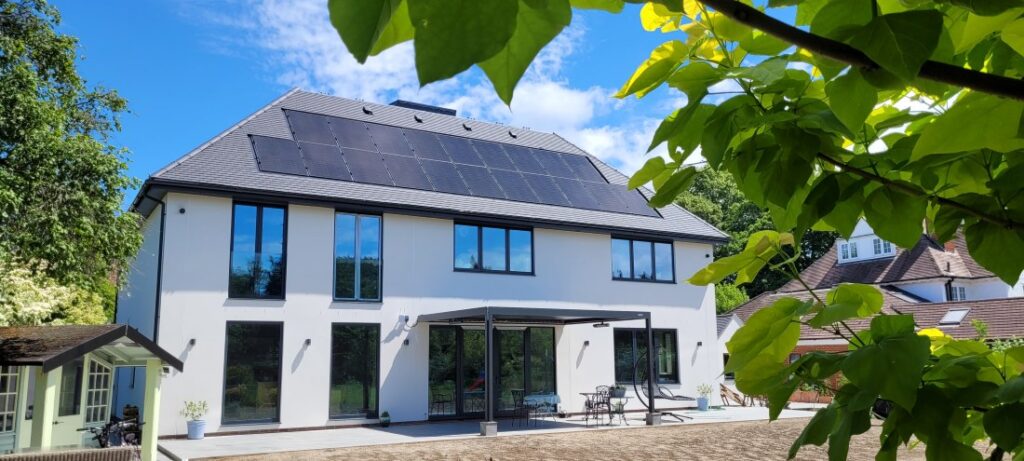
The client was provided with a fixed-fee quotation that listed the individual services included in our appointment. These items added up to the overall fixed fee.
We then carried out the agreed scope for that fixed amount.
As the project progressed, the client decided to extend the scope of our services. Each time this occurred, we discussed the additional work and agreed a further fixed fee before completing it.
This meant the original appointment remained clear while still allowing the service to evolve with the project.
The client was not prevented from requesting additional support, and we were not expected to undertake unlimited extra work under the original quotation.
The arrangement provided flexibility while preserving cost transparency.
A Fixed-Fee Care Home Project for a Contractor.
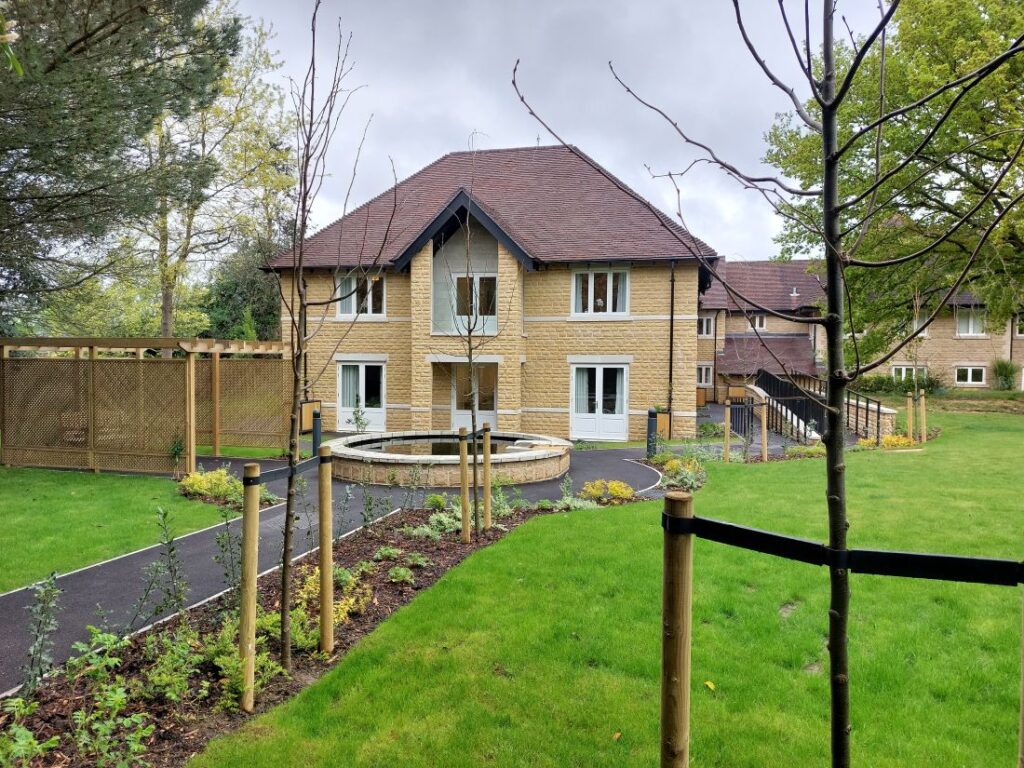
We used a similar principle on a Care Home Project for a large contractor.
We used a similar principle on a care home project for a large contractor.
We provided a fixed-fee quotation based on the project scope and the architectural services required.
We delivered that agreed scope for the fixed fee. Only when the scope changed did we prepare an additional fee for the extended work.
Contractor-led projects can involve complex programmes, technical requirements and coordination with multiple parties. A clearly defined fee for each required project stage helps the contractor understand both the cost and the architectural deliverables.
It also provides a straightforward mechanism for managing changes if the contractor’s requirements, design responsibilities or programme evolve.
When Might an Architect Charge an Hourly Rate?
Hourly charging can be appropriate when it is not possible to define the scope accurately at the outset.
For example, a client may need early advice but may not yet know:
- What type of development they want to pursue
- Whether an existing building can be altered
- How much design investigation will be required
- Which services they will eventually need
- How many meetings or design options may be necessary
In these circumstances, preparing a fixed fee immediately could involve too much uncertainty.
We may therefore advise the client that the initial work should be charged at an hourly rate until the scope becomes clear.
Once the requirements can be properly defined, we can prepare and agree a fixed fee for the next stage of the project.
This can be a fairer approach than building a large contingency into a fixed fee to cover work that may never be needed.
When an architect charges hourly, the client should ask about:
- The hourly rate
- Who will undertake the work
- How time will be recorded
- How frequently invoices will be issued
- Whether an estimated budget or spending limit can be agreed
- When the work is likely to move onto a fixed-fee basis
An hourly rate should still be managed transparently. The client should have a reasonable understanding of the likely expenditure and should be told if the work is approaching an agreed limit.
How Do Percentage-Based Architectural Fees Work?
Some architects calculate their fee as a percentage of the project’s construction cost.
For example, if the architect’s fee is agreed as a percentage and the construction cost increases, the architectural fee may also increase.
Percentage fees are often associated with full architectural services, particularly where the architect remains involved from the early design stages through to construction.
This approach can reflect the fact that larger or more expensive projects may involve greater design responsibility, coordination and risk.
However, construction cost alone does not always determine how much architectural work will be required.
A relatively modest project could be technically difficult, while a more expensive project could have a clear and repetitive scope. Clients should therefore understand why a percentage fee is being proposed and how it will be calculated.
Important questions include:
- Which construction cost figure will be used?
- Does the percentage apply to the initial budget or final construction cost?
- Are consultant fees, VAT and specialist works excluded?
- What happens if the project budget changes?
- Which architectural services are included?
- Are any services charged separately?
The percentage itself should never be considered without reviewing the scope of services attached to it.
Which Fee Method Is Best?
A fixed fee is often suitable where the scope can be clearly defined. It provides certainty and allows the client to budget for the architectural work.
An hourly rate can be appropriate where the requirements are uncertain or where the architect is being asked to undertake a limited amount of advisory or investigative work.
A percentage fee may be suitable for larger projects or appointments covering multiple stages, provided the calculation and scope are clear.
In some cases, a combination of fee methods may be the most sensible solution. An architect might charge hourly during an uncertain early stage and then agree a fixed fee once the project requirements have been established.
The right approach depends on:
- The clarity of the project brief
- The complexity of the work
- The services required
- The likely duration of the appointment
- The level of uncertainty
- The client’s preferred approach to budgeting
What Should Be Included in an Architect’s Fee Quotation?
A professional fee quotation should explain much more than the total cost.
Clients should look for a clear description of:
- The project and client brief
- The architectural services included
- The project elements or stages that are covered
- The drawings and information to be produced
- The number of design options or revisions included
- Attendance at meetings
- Planning application responsibilities
- Building Regulations responsibilities
- Tender or contractor-selection services
- Construction-stage involvement
- Expenses and disbursements
- VAT
- Exclusions
- Payment stages
- The process for agreeing additional work
Two quotations with very different prices may not include the same services.
A lower quotation might exclude work that will be required later, while a higher quotation might include a much more comprehensive appointment.
Comparing only the total fee can therefore be misleading.
Why the Cheapest Architect May Not Offer the Best Value
In our opinion, an architect’s experience is more important than the price alone.
A client is not simply buying a set of drawings. They are appointing someone to help them make design decisions that can affect planning permission, construction cost, buildability, programme and the long-term quality of the finished building.
An experienced architect will be able to steer the project in the right direction to achieve your brief, while at the same time considering planning constraints, local authority requirements, neighbours, and the simplicity or complexity of the build.
This experience can be particularly valuable when difficulties arise.
When quoting for projects, we show clients relevant examples of our previous work and direct them to suitable case studies on our website.
Clients should ask prospective architects:
- Have they completed similar projects?
- Do they understand the relevant building type?
- Do they draw the existing site or accurately
- Do they work in 3D?
- Have they worked with the local planning authority?
- Can they show comparable completed work?
- Who will actually work on the project?
- What level of service is included?
- How will changes and additional fees be managed?
The lowest fee may not represent the best value if the architect lacks relevant experience or if important services have been excluded from the quotation.
Common Misunderstandings About Fixed Architectural Fees
One common misunderstanding is that a fixed fee covers anything the client may request during the project.
In reality, a fixed fee covers a fixed scope.
If the project, brief or required services change, the architectural workload may also change.
Another misunderstanding is that every architect includes the same services within their quotation. In reality, fee proposals can differ considerably.
One architect may include planning, technical design and construction support, while another may quote for planning drawings only.
Clients should also avoid assuming that all project changes will automatically result in an additional fee. Minor changes can often be accommodated as part of the normal design process.
The key question is whether the requested work is reasonably included within the agreed scope or represents a genuine extension to it.
A clear quotation and open communication make that distinction much easier.
How Clients Can Keep Architectural Fees Under Control
Clients can help manage fees by establishing a clear brief and making key decisions at the appropriate time.
Useful steps include:
- Agreeing the required services before work begins
- Reading the full fee proposal rather than focusing only on the total
- Asking questions about anything that appears unclear
- Identifying exclusions at the outset
- Confirming important decisions in writing
- Avoiding repeated changes to the brief
- Discussing additional work before it is undertaken
- Reviewing the project scope as the design develops
Changes are sometimes unavoidable, and clients should not feel that they cannot adapt their project.
However, understanding the programme and the consequences of late changes can help reduce unnecessary redesign and additional cost.
Questions to Ask an Architect About Their Fees
Before appointing an architect, it is sensible to ask:
- Is the fee fixed, hourly, percentage-based or a combination?
- Exactly what services are included?
- Do you have a high planning approval rate? (MB Architecture is currently 98%).
- Which elements or RIBA stages are covered?
- What services are excluded?
- What information will the architect produce?
- What could result in an additional fee?
- How will extra work be agreed?
- When will invoices be issued?
- Does the fee include expenses and VAT?
- What relevant project experience can the architect demonstrate?
The architect should be able to answer these questions clearly.
A well-prepared fee proposal should help the client understand both the cost and the service they will receive in return.
Choosing the Right Architectural Fee Arrangement
The best fee arrangement is one that reflects the project and is understood by both the client and the architect.
At MB Architecture, we generally favour fixed fees because they provide cost certainty for our clients and allow us to plan our resources effectively.
For private clients and developers, we usually build the fixed fee from an itemised list of required services. For contractor clients, we commonly agree a fee for each of the relevant RIBA project stages.
Where the scope is initially uncertain, we may recommend working on an hourly basis until the requirements can be properly defined. We can then prepare a fixed fee for the agreed scope.
Whatever fee method is used, clarity is essential. Clients should understand what is included, what is excluded and how any additional services will be agreed.
Price is important, but it should not be considered in isolation. The architect’s experience, the quality of their previous work and the relevance of that experience to the proposed project are often far more important to its success.